
AI-Driven Layoffs Are No Longer a Warning — They're Happening Right Now
Snap just laid off 1,000 employees because AI now writes 65% of their code. This isn't a tech-sector anomaly — it's a business template. Here's what every leader needs to understand and do before it hits their industry.
Ajeet Singh
Founder & CEO, VyaptIX
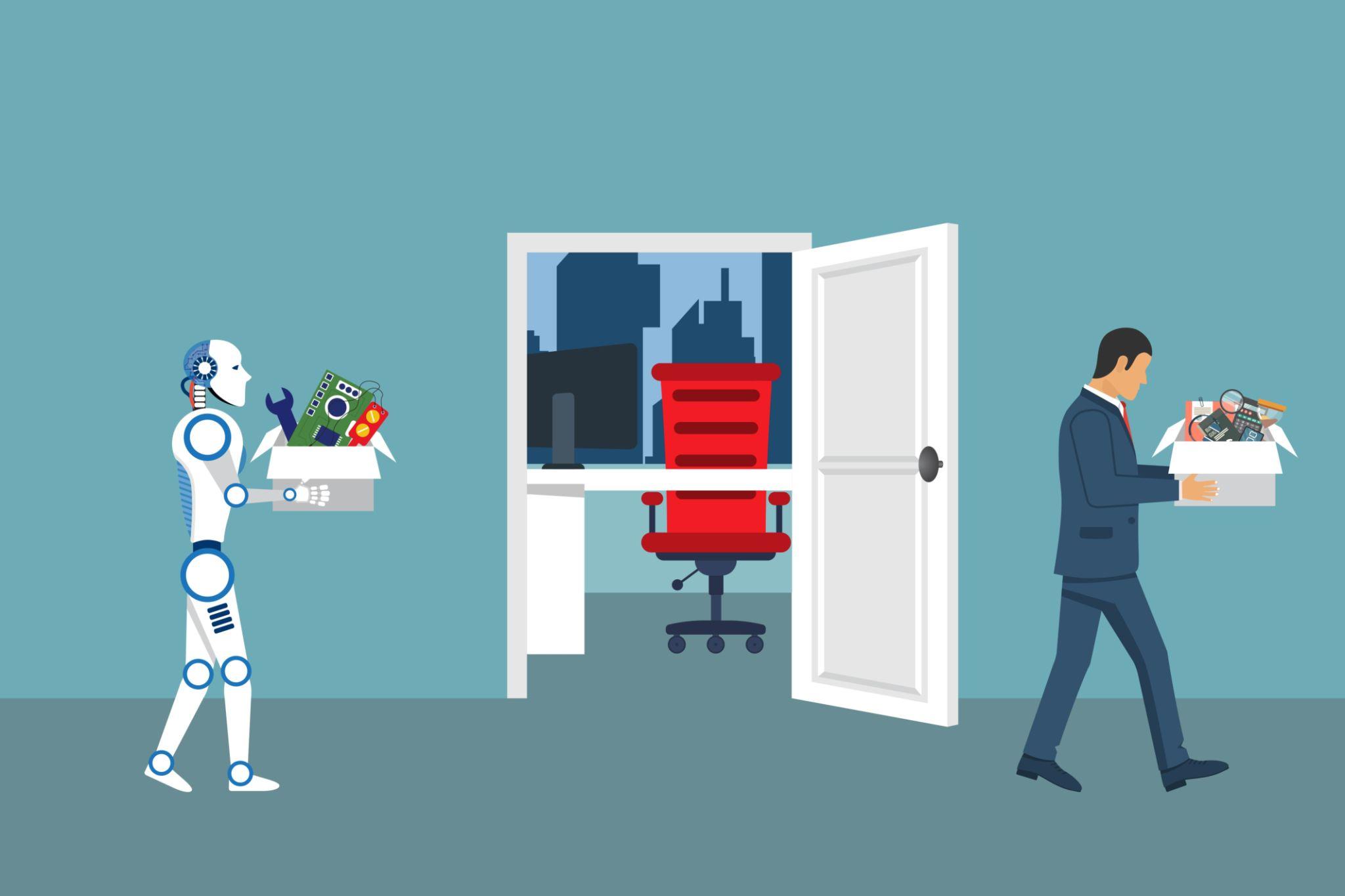
I've been in too many conversations lately where business leaders say, "AI will eventually affect our industry, but we have time." I want to challenge that assumption directly — because Snap's announcement this week makes it very hard to hold onto.
Snap laid off 1,000 employees. That's 16% of their entire workforce. The reason cited wasn't a bad quarter, a failed product, or a market downturn. The reason was AI productivity gains. And the number that should stop you cold: AI now generates more than 65% of all new code written at Snap. CEO Evan Spiegel expects over $500 million in annualized cost savings by H2 2026.
This isn't a warning about the future. This is a report from the present. The restructuring has begun.
What Snap Actually Did — And Why It Matters
Snap didn't just buy some AI tools and replace a few junior engineers. They systematically rebuilt how software development works inside their company. Over 18–24 months, they layered AI into their engineering workflows until the AI was doing more than the humans — and then they adjusted the headcount accordingly.
The sequence was roughly this:
- 1
AI assists with code suggestions (GitHub Copilot era)
- 2
AI writes full functions and modules from prompts
- 3
AI handles testing, documentation, and code review
- 4
AI-generated code surpasses 50% of total output
- 5
Headcount is restructured to match the new reality
Snap moved through all five stages faster than most companies expected. And they are not alone. They are simply the first major company to announce the restructuring publicly, with specific numbers.
The Industries Most Immediately at Risk
Let me be straightforward about which business functions are facing the fastest disruption right now — not in 10 years, but in the next 12–24 months:
| Function | AI Disruption Level | Why |
|---|---|---|
| Software development | Very high | AI writes, tests, and deploys code |
| Content and copywriting | Very high | LLMs generate high-quality text at scale |
| Customer support (tier 1) | High | AI chatbots resolve 70–80% of standard queries |
| Data analysis and reporting | High | AI generates reports from raw data in seconds |
| Legal document review | High | AI reads and summarises documents faster than humans |
| Financial modelling | Medium-High | AI builds models, identifies patterns, flags anomalies |
| HR screening and sourcing | Medium | AI filters resumes and drafts job descriptions |
| Marketing campaign creation | Medium-High | AI generates copy, visuals, and A/B variations |
If your business runs any of these functions at scale, the Snap playbook is coming for you — not as a threat, but as an option your CFO will eventually put on the table.
Why This Isn't Just a Tech Problem
The mistake most business leaders make is treating AI-driven workforce restructuring as a Silicon Valley story. It's not. It's a cost story, and cost stories travel across every industry.
When a tech company demonstrates that AI can deliver $500 million in savings at scale, it creates a template. Private equity firms notice. Boards ask CFOs about it. Consultants start building the deck. Within 12–18 months, that same conversation is happening in manufacturing, banking, insurance, healthcare administration, logistics, and retail.
The companies that will be caught flat-footed are the ones watching from a distance and assuming they have more time than they do.
What This Means If You Run a Business
I want to be careful here, because I've seen two extreme reactions to this kind of news — and both are wrong.
The wrong reaction #1: Panic. Announcing aggressive AI replacement without process clarity, without understanding which tasks actually benefit from automation, and without preserving the human judgment your business genuinely needs. This creates chaos, not efficiency.
The wrong reaction #2: Denial. Deciding that "our business is different" and doing nothing. This is how companies become the cautionary tale in someone else's presentation two years from now.
The right reaction: Proactive audit. Look at every role in your business and ask: what percentage of this work is repetitive, rule-based, and predictable? That percentage is the AI opportunity. The rest — judgment calls, relationship work, creative problem-solving, leadership — stays human.
A Practical Framework for This Audit
- 1
Map your workflows
Document what actually happens in each role day-to-day. Not the job description — the real daily activity.
- 2
Classify each task
Is this task repetitive and predictable (AI candidate) or contextual and judgment-heavy (human-essential)?
- 3
Calculate the math
If 40% of a role's tasks are AI-automatable, that doesn't mean eliminating 40% of your workforce. It means each person can handle 40% more volume — or you grow without proportional headcount growth.
- 4
Pilot before restructuring
Automate one process, measure results, prove it works, then expand. Never automate everything at once.
- 5
Be transparent with your team
People handle change better when they understand the why and have time to upskill. Surprise restructuring destroys trust and culture.
The Opportunity Inside the Disruption
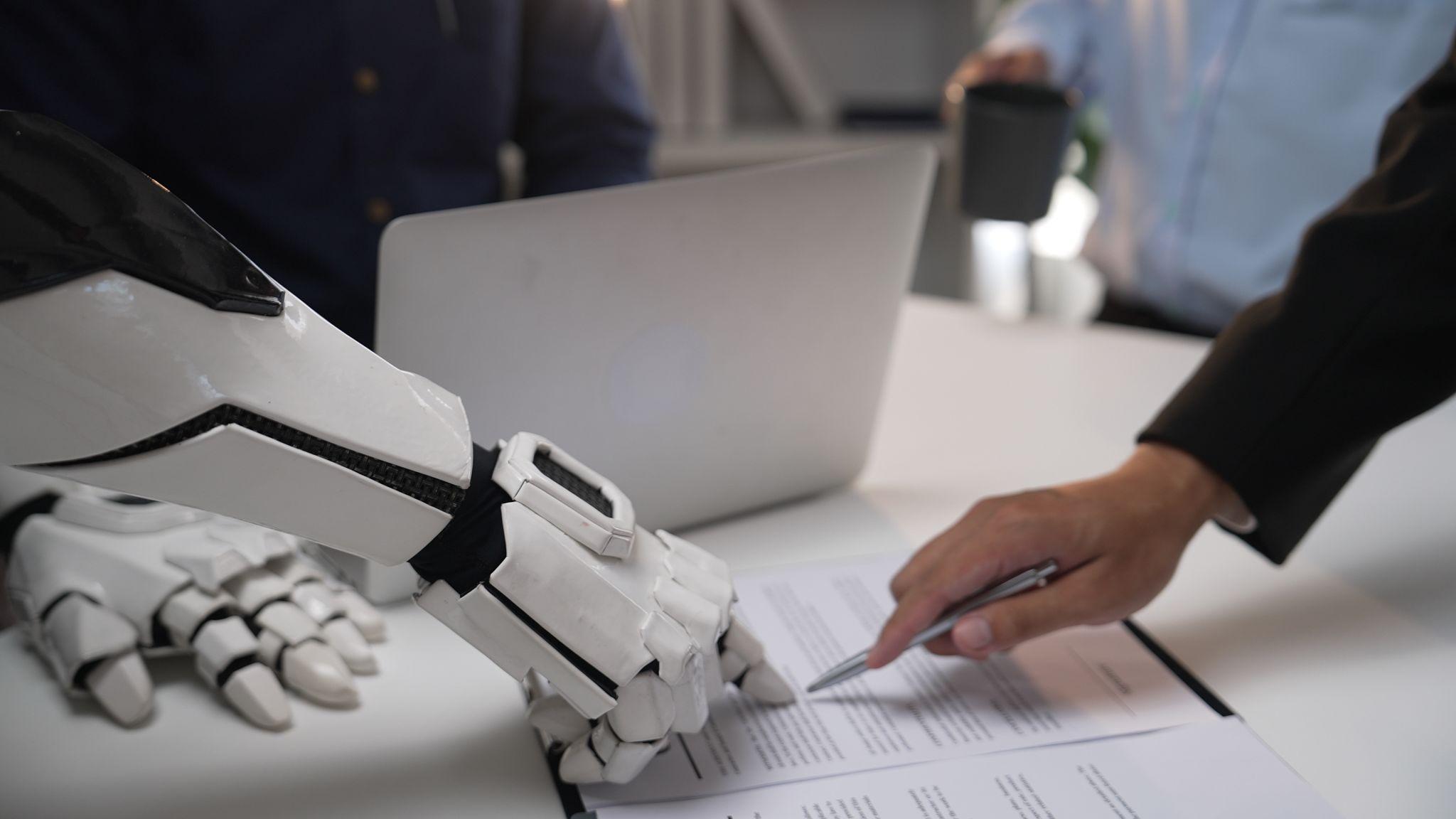
Here's the part of this story that often gets buried under the headline: AI-driven restructuring is also creating new roles.
At Snap, alongside the layoffs, they're hiring AI engineers, prompt engineers, AI QA specialists, and workflow designers. The work isn't disappearing — it's shifting. The companies that win are the ones that help their teams make that shift proactively, rather than reactively.
The businesses that will lead in 2026 and beyond aren't the ones with the fewest humans. They're the ones with humans doing the highest-value work, supported by AI doing everything else.

A Note on What "65% AI-Generated Code" Actually Means
I want to demystify this stat, because it sounds more extreme than the reality. When AI generates code, a human engineer still reviews, contextualises, modifies, and deploys it. The engineer's role changes from "writing code" to "guiding AI to write the right code and verifying it." It's a fundamentally different skill set — less syntax, more problem architecture and judgment.
The same shift is happening in every other knowledge work function. The output is AI-generated. The direction, judgment, and quality control remain human. What changes is the ratio.
What We're Seeing at VyaptIX
Across the businesses we work with — from SMBs to mid-size enterprises — we're seeing the same pattern: the companies that started automating 18 months ago are now running leaner, faster, and with higher margins. The companies that waited are now scrambling to catch up while managing the cost pressure from competitors who didn't wait.
The gap is widening every quarter.
If you want to understand what an AI-driven workflow audit looks like for your specific business — not a generic framework, but a real analysis of your operations — that's exactly what we do at VyaptIX. Visit vyaptix.com, reach out at ajeet@vyaptix.com, or WhatsApp directly at +91 97171 56466. Let's look at your business before the board does.