
Meta Is Building an AI Clone of Zuckerberg — What That Tells Us About the Future of Leadership
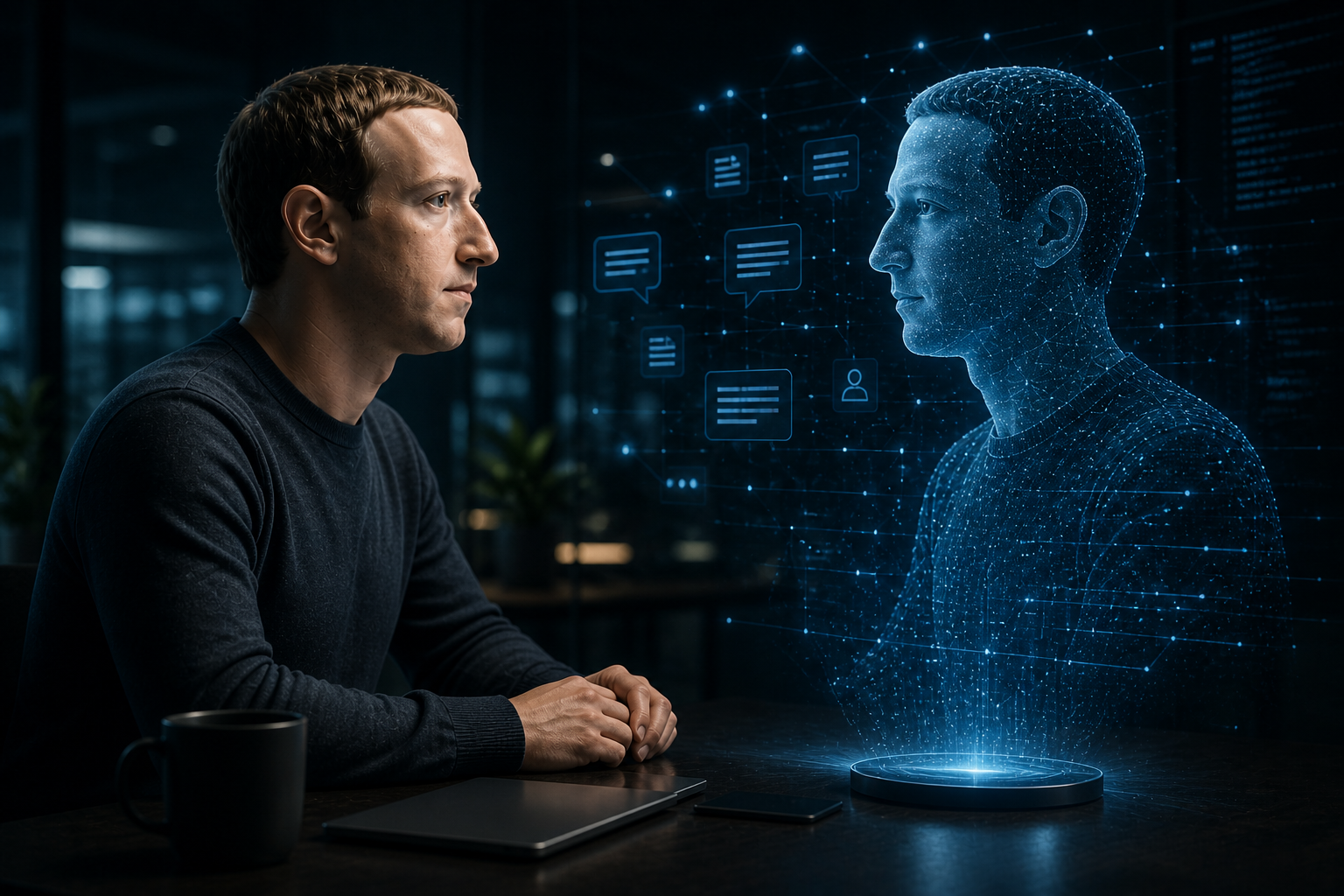
Meta is training an AI on Mark Zuckerberg's communication style and business philosophy to interact with employees and make public statements when he's unavailable. This raises questions every business leader should be thinking about.
Ajeet Singh
Founder & CEO, VyaptIX
When I first read this story, my instinct was to dismiss it as a Silicon Valley curiosity — the kind of thing that makes for interesting headlines but has nothing to do with how real businesses operate. Then I sat with it for a day, and I changed my mind.
According to a Financial Times report, Meta is developing an AI system trained specifically on Mark Zuckerberg's mannerisms, communication style, decision-making patterns, and business philosophy. The purpose: to interact with employees, give advice, make public statements, and represent leadership at scale when Zuckerberg himself is unavailable.
Read that again. An AI trained to be the CEO.
This isn't a chatbot. This isn't a FAQ system. This is an attempt to encode a specific human's way of thinking and communicating into a system that can then extend that person's reach and presence across an organisation of 70,000+ people.
What does leadership mean when a CEO's decisions, tone, and judgment can be replicated at scale by a machine trained on their outputs?
What Meta Is Actually Building
Let's be clear about what this is and isn't, based on what's been reported.
What it is
An AI system fine-tuned on Zuckerberg's extensive history of public communications — earnings calls, internal memos, interview recordings, speeches — to produce responses that reflect how he thinks and communicates.
What it isn't
A fully autonomous decision-making system. The AI is designed to extend Zuckerberg's reach, not replace his judgment on consequential decisions. At least, that's the design intent.
The key use case
Meta has 70,000+ employees across dozens of countries and time zones. An AI that captures his communication style can maintain cultural consistency, answer common leadership questions, and reduce the distance between the CEO and the organisation.
Why This Is More Sophisticated Than It Sounds
Creating an AI that genuinely captures a specific person's way of thinking — not just their word choices — requires deep fine-tuning work. You're not just training the model to write in a certain style. You're encoding:
Decision frameworks
How does this person weigh tradeoffs? What do they prioritise when values conflict? This requires examples across many decision contexts.
Communication style
Directness, warmth, use of technical language, how they handle disagreement — tone varies enormously by context and audience.
Known positions
What does this person believe about specific topics — product strategy, company culture, competition, AI, talent? These must be captured consistently.
Tone calibration
How formal or informal in different contexts? How do they communicate urgency versus normalcy? The difference matters enormously.
This is genuinely hard to do well. And the failure modes are significant — a system that sounds like Zuckerberg but reasons like a generic language model could produce confident-sounding answers that contradict his actual positions, creating confusion or worse.

The Accountability Question
Here's where I get uncomfortable, and I think you should too.
When Zuckerberg says something — in an earnings call, in an internal memo, in a public statement — there is a human being accountable for those words. He can be questioned about them, challenged on them, held responsible for them. The accountability is clear.
When an AI trained to sound like Zuckerberg says something — even to an employee asking an internal question — who is accountable? If the AI gives bad advice, or expresses a position that doesn't reflect his actual view on a new situation, or contradicts what he said in a different context — what is the recourse?
This isn't hypothetical. Language models confidently produce incorrect outputs. They pattern-match to training data rather than genuinely reasoning about novel situations. An AI trained on historical Zuckerberg communications will eventually be asked about situations that didn't exist when that training data was created — and it will answer, with confidence, in his voice. The accountability gap is real and unresolved.
What This Means for Organisations at Scale
Despite my concerns, I want to be fair about the genuine problem Meta is trying to solve — because it's a real one.
Large organisations suffer from leadership communication decay. The further you are from the CEO, the less clearly you understand their priorities, their reasoning, and their vision. This gap causes misalignment, slower decision-making, and culture drift. People in offices far from HQ, in different time zones, in different languages — they often feel disconnected from leadership.
AI has a legitimate role in addressing this. Consider the spectrum of use cases:
AI as knowledge base
AI that answers common leadership questions ('What's our policy on X?', 'How does leadership think about Y?') based on documented company positions — valuable and already happening in many companies.
AI as communication tool
AI that helps leaders communicate more consistently by drafting communications in their voice for review and approval — also valuable, increasingly common, and unambiguously ethical.
AI as communication proxy
AI that represents a leader in real-time interactions without their review — this is the part that deserves scrutiny. The distinction from the above two is where governance gets critical.
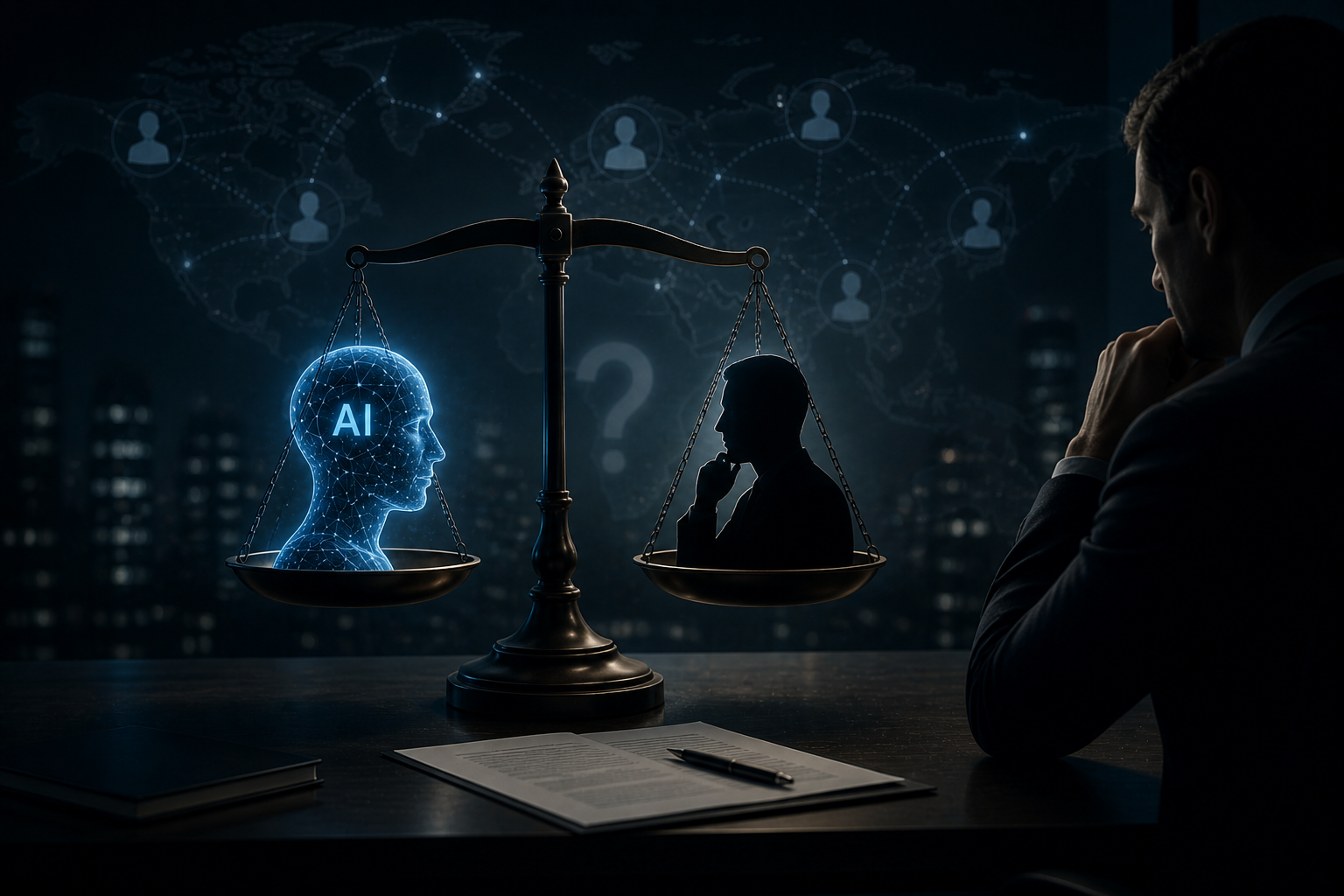
The distinction matters enormously. AI as a communication tool is fundamentally different from AI as a communication proxy.
The Authenticity Paradox
There's a philosophical tension at the heart of this project that I find fascinating.
Zuckerberg has built Meta's culture around his specific vision and values. The entire point of strong founder-led culture is that it's genuinely from the founder — their actual thinking, their actual judgment, their actual presence. That authenticity is what makes it credible and coherent.
An AI that mimics that presence is, by definition, not authentic. Employees who interact with the Zuckerberg AI and believe they're getting genuine leadership guidance are, in some sense, being deceived — even if Meta is transparent about the AI's existence.
At what point does an AI clone of a leader undermine the very thing that makes that leader's presence valuable?
What Business Leaders Should Take From This
Regardless of how you feel about Meta's specific project, this story signals a shift that every leader should think through.
Your communication style is becoming a data asset
Every memo you write, every all-hands you record, every email you send — this is training data. Leaders who communicate clearly, consistently, and authentically are building a richer record that AI can work with.
The question of AI-assisted leadership communication is coming to every organisation
It's not whether — it's when and how. Getting ahead of this means defining clear boundaries now: which decisions require real human judgment, which communications require the actual leader's involvement, and where AI assistance is appropriate.
Transparency with your team matters enormously
If you use AI to help draft communications, say so. Employees who discover that communications they believed were personal were actually AI-generated will feel deceived — even if the AI captured your intent accurately.
The accountability gap must be designed around, not ignored
Any AI system that represents a leader needs clear escalation paths, clear disclaimers, and clear human review mechanisms. "The AI said it" is not an acceptable answer when something goes wrong.
The leaders who will navigate the AI era well are the ones who stay genuinely present and human where it matters most — and use AI to handle everything else, transparently and deliberately.
A Broader Pattern Worth Watching
Meta's Zuckerberg AI is the most public example of what will become a broader pattern: organisations using AI to capture institutional knowledge, leadership philosophy, and communication style before it walks out the door.
Think about it from a succession planning perspective. What happens when a founder or exceptional leader leaves? Typically, enormous amounts of tacit knowledge, judgment, and culture leave with them. AI systems trained on their outputs could preserve some of that — not as a replacement for leadership, but as an institutional memory.
Used this way — as a knowledge preservation tool, not an impersonation tool — AI has genuine organisational value. The distinction between those two use cases is where good governance gets built.
At VyaptIX, we think carefully about where AI replaces human judgment and where it supports it. If you want to explore what AI-assisted leadership and communication looks like in your organisation — built around your values and with clear human accountability — visit vyaptix.com, email ajeet@vyaptix.com, or WhatsApp at +91 97171 56466.